Written by: Alec Bigras
Reviewer: Editorial TeamSpring has a way of making you fall in love with your home all over again. The snow finally pulls back, the light shifts, you crack a window for the first time since October and suddenly the whole place feels alive. After months of hunkering down, you're actually paying attention to the place you live in again. Looking around. Noticing things.
Which makes right now the perfect time to give your windows a second look.
Whether it's winter or summer, both seasons test your seals, your frames, and your weatherstripping. They also both show up on your hydro bill when something starts to give. However, like most things that work hard, windows have a way of telling you when they're ready for an upgrade.
The good news is that none of it is complicated once you know what to look for. Here are the five signs that come up most often.
Sign 1: Cracks, Soft Spots, Rot or Mould on Your Window Frame
Here's one that's easy to spot and worth catching early. Take a slow walk around your windows, inside and out, looking at the frames. The frame is the foundation everything else depends on, and when it starts to deteriorate, you'll usually see it or feel it before anything else.
The age of the window matters here more than most people realize. A window installed in the last 10-15 years should still look and feel solid, with clean lines, and consistent colour.
However, anything older than that has weathered a lot of Canadian winters, and it's worth paying attention to whatever signs your window is starting to show. It usually follows a predictable order: the glass unit tends to go first. Think fogging or condensation between the panes or reduced thermal performance, followed by the hardware and seals.
By the time the frame itself starts showing visible damage, the window has typically been trying to tell you something for a while. Depending on the material, look out for some of these signs of deterioration on window frames:
- On the exterior, look for discolouration, warping along the edges, or sections where the material is cracked or splitting at the seams.
- On the interior, run your hand along the frame, particularly at the corners and the bottom edge where condensation tends to collect. If anything feels soft, damp, or uneven to the touch or has green/black dots (signs of mould) that's worth paying attention to.
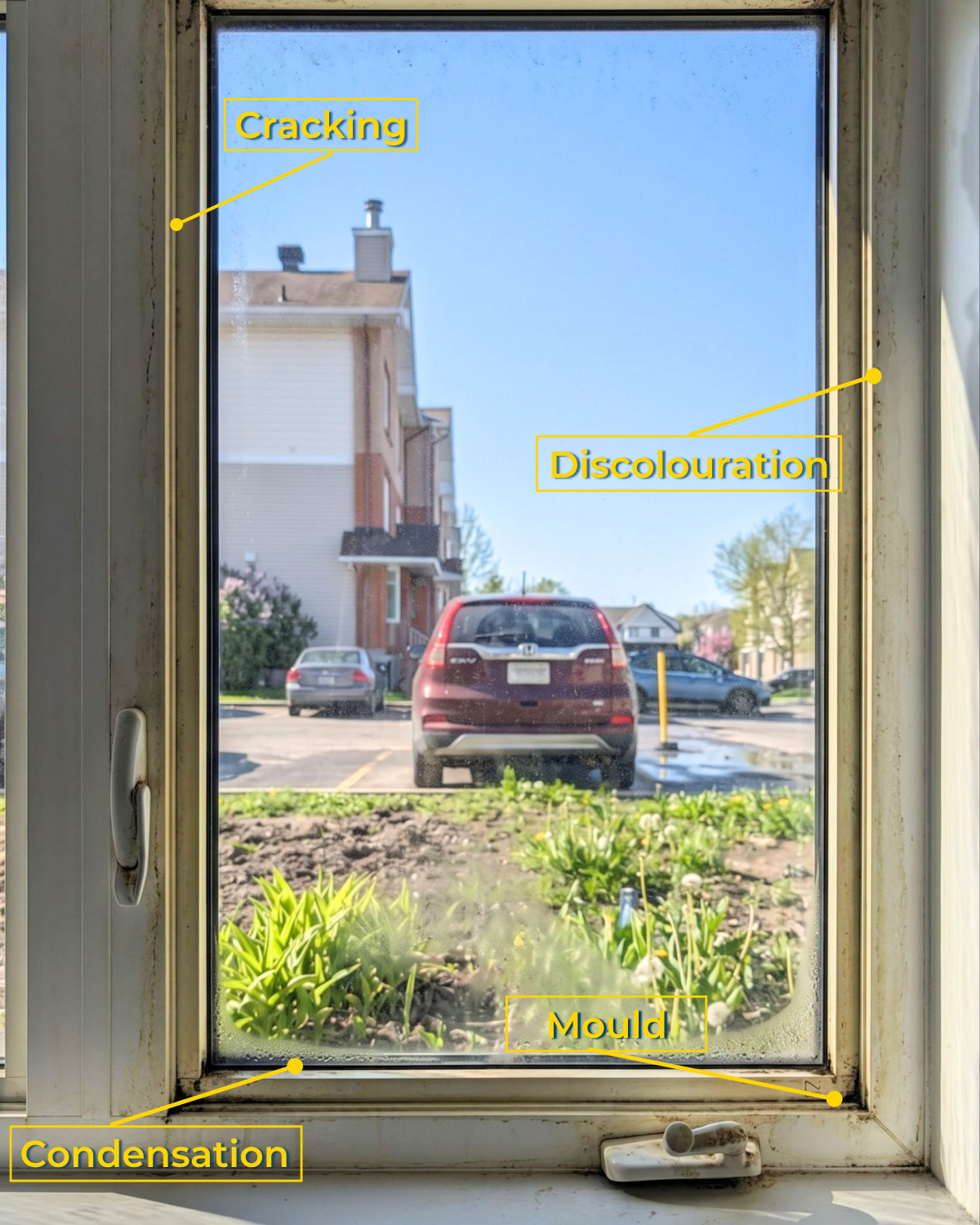
What Are the Signs of Window Deterioration By Frame Material?
Visible frame damage tends to show up in a few specific ways, depending on what your windows are made of. In Canada, many older homes still have wood or aluminum frames that were never replaced.
If you have an older home with wood frames, moisture is the main thing to watch for. Wet springs and humid summers are genuinely tough on wood, and by the time damage is visible, bubbling or peeling paint, dark staining, soft spots that give slightly when you press, it's usually been working its way in for a while.
The reason it's worth acting on promptly is that moisture in a window frame doesn't stay there. It moves into the surrounding wall cavity, and what starts as a frame issue can quietly become a much bigger job once the drywall and insulation behind it get involved. That's the part that changes the scope, and the cost, of the conversation.
If you're still living with original aluminum frames from the 70s or 80s, they've probably earned their retirement. Corrosion and pitting are the visual giveaways. However, the more telling sign is simply how the window performs.
Aluminum conducts heat and cold directly, so a frame that feels noticeably cold to the touch on the inside edge in winter is doing the opposite of what a good window should.
Vinyl windows are what most homes have had installed in the last twenty-plus years because they can handle Canada's changing climate. A healthy frame should feel solid, consistent, and look uniform in colour.
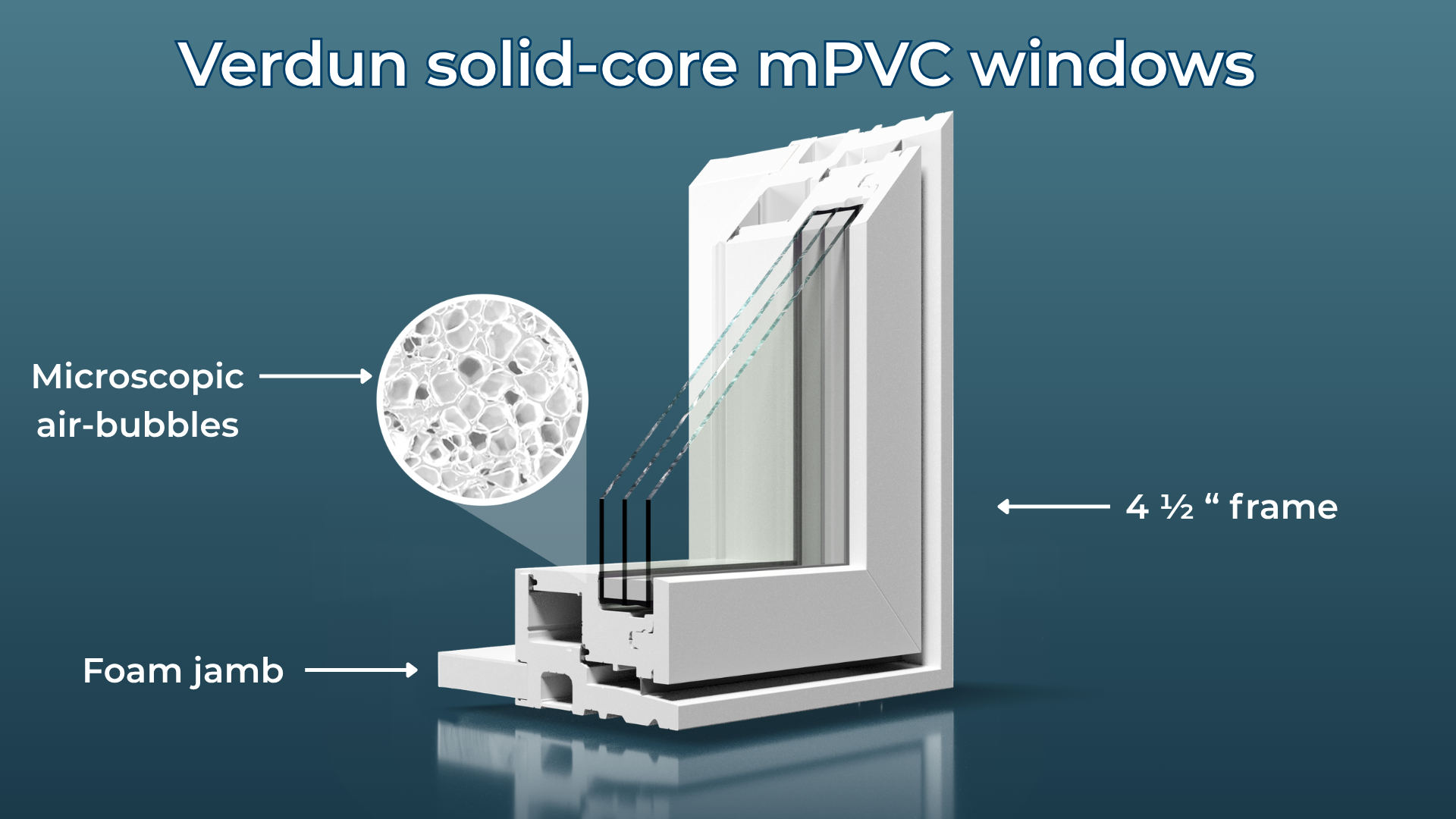
Verdun Windows and Doors by Nordik solid-core mPVC windows (RevoCell) are engineered with a stronger frame material, which means they expand and contract less (virtually zero) due to temperature shifts. On the other hand, hollow vinyl (standard PVC) windows can be affected by temperature changes as they expand and contract with the hot and cold. This can cause the functionality and efficiency of the windows to degrade over time, due to a loss of shape and opportunity for air loss in the home.
Many standard PVC windows use wood jambs internally, which quietly reintroduces the moisture problem right back into the frame. Verdun Windows and Doors by Nordik windows use foam jambs instead because foam doesn't absorb moisture. Foam stays stable, doesn't rot, and adds a layer of insulation too.
Sign 2: Why Are My Windows Still Drafty Even When They're Closed?
A drafty window, one that lets air sneak in even when it's fully closed, usually means the seals or weatherstripping have worn out over time. Think of it like a winter jacket with a broken zipper: it still looks like a jacket, it's technically "closed," but it's not doing the one job you actually need it to do.
We've sometimes grown a little too accustomed to a certain amount of chill here in Canada. It's kind of part of the deal. But there's a real difference between "it's cold outside" and "cold air is actively getting into my home through a window that's supposed to be shut." One is just the weather. The other is worth a closer look.
In July, your windows are letting the cool air you're paying for slip right back outside. Your furnace in winter, your AC in summer, both end up working harder than they should. And both show up on your hydro bill.
Drafts tend to show up more in older windows. Anything that is older than 10-15 years is worth paying attention to here. Here's what happens: weatherstripping compresses and hardens over the years. Frames shift as the house settles. After enough freeze-thaw cycles, a seal that was once tight becomes something a little less so over time.
How to Test for a Drafty Window Before Calling a Contractor
The best way to tell if your window is drafty is to have a professional take a look and assess your window performance. Our team is trained to know what to look for and have been doing this for years.
However, if you want a quick DIY test, here's what you can do. Light a candle and hold the flame close to the edges of a fully closed window, the top, both sides, and the bottom track. Move it slowly in different directions along the window frame. If the flame drifts or pulls toward the glass, air is moving through somewhere it shouldn't be.
You might also just feel it with your hand held near the frame on a windy day, a faint but consistent coolness along the edge, separate from the natural temperature of the glass itself.
On the exterior, look for any visible gaps where the window meets the wall, or sections where the caulking has pulled away, cracked, or gone missing entirely. After a cold winter, that's not uncommon.
If you find a draft, it's a good reason to have someone take a look. However, a draft doesn't automatically mean the window itself is the problem. Sometimes it's the insulation around the window frame that's degraded over time, which can be a simple, standalone repair. Other times, it's a sign the window has reached the point where a conversation about replacement makes sense.
Either way, the only way to know which one you're dealing with is to have someone actually look.
Sign 3: What Does Condensation or Foggy Glass Between Window Panes Mean? And Can It Be Fixed?
Foggy glass between your window panes isn't a cleaning problem. It's a sign the window's insulating seal has failed and the glass unit needs to be replaced.
Here's what's actually going on. Modern windows are built with two or three panes of glass with a sealed chamber between them filled with argon gas. Argon is denser than regular air, which makes it a significantly better insulator, slowing heat transfer in winter and reducing heat gain in summer.
Think of it like a thermos versus a regular glass. Pour hot coffee into a plain glass and within minutes the heat has gone right through it. The thermos keeps it hot for hours, not because the walls are thicker, but because of what's between them. Argon in your window is doing the same job. When the seal fails due to repeated expansion and contraction of the vinyl frame, that layer is gone, and regular humid air takes its place. Your window is basically back to being plain glass.
That fogging or condensation you see is moisture that got in and has nowhere to go. When you see it, the glass unit needs to come out and be replaced. There's no re-sealing or topping up the argon after the fact.
A bit of condensation on the room side of the glass on a cold morning is actually normal in a well-insulated home. It just means your home is holding humidity well, and a dehumidifier or some ventilation usually sorts it out. That's condensation you can wipe off. The fog between the panes? That one stays, that's a sign something is wrong.
The good news is that when that conversation happens, it's also a great opportunity to upgrade to a higher-performing window that will handle whatever the weather throws at it even better than what was there before.
Sign 4: Your Window Is Stiff, Stuck, or Not Opening or Closing the Way It Used To
A window that won't open, close, or lock properly typically means the hardware has worn out, the frame has shifted over time, or both. It's worth paying attention to earlier rather than later, because a window that doesn't close completely is a comfort and energy issue. One that doesn't lock reliably is also a security issue.
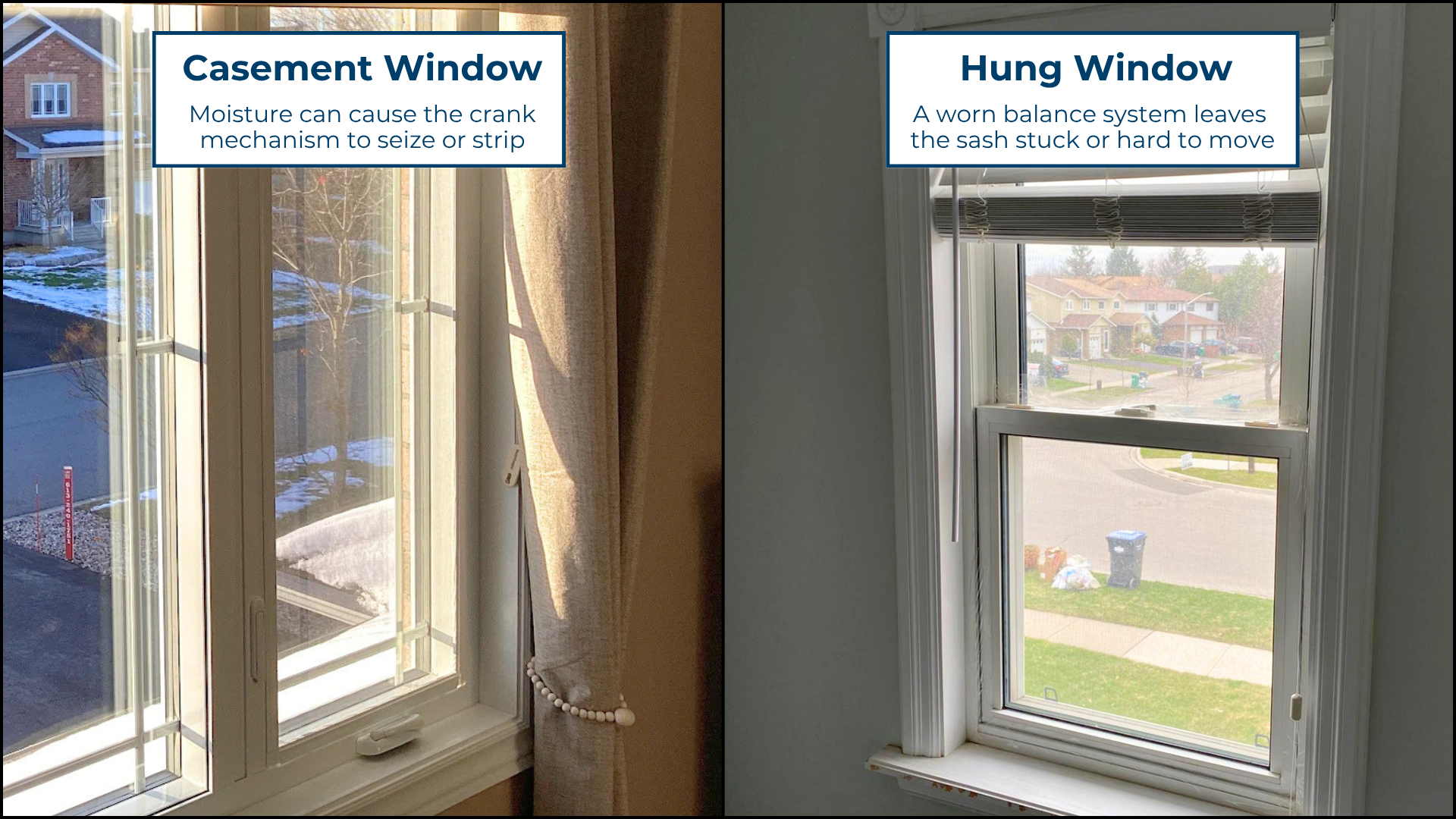
Casement windows, the ones with a crank, can seize or strip over time, especially once moisture finds its way into the mechanism. Hung windows rely on a balance system; the balance system that holds the sash in place can wear out. This can leave you with a window that either won't stay open or fights you every time you try to move it.
In both cases, if the hardware is the only issue and the frame is in good shape, it may be addressable on its own. However, if the frame has shifted or warped, which is common in many homes as they settle over decades, it may mean the window structure may be compromised. At this point, hardware fix is only going to be a temporary solution.
Sign 5: How Failing Windows Can Affect Your Energy Costs
Of all five signs, this one is the most easy to miss. Windows don't fail overnight, and they don't announce themselves on your hydro bill with a sudden spike. The energy loss is so gradual that homeowners can potentially attribute the slow climb in their bills to rising energy prices rather than anything happening in their home.
Another thing worth noting: replacing a single window is unlikely to move the needle on your energy bill in any meaningful way. The impact becomes noticeable when multiple windows are replaced at once. That's when the cumulative thermal improvement across the whole home starts showing up consistently in your monthly costs.
So how do you actually know if windows are part of the problem? The easiest way is a window professional can do an in-home assessment specifically focused on your windows, checking seal integrity and frame condition to get a better sense of their performance.
How a Failed Window Seal Can Be The Cause of A Higher Energy Bill?
When a window has a failed insulating seal, sometimes you can see fogging between the panes (check Sign #3). However, most times it usually doesn't look like anything has changed with no visible crack, draft, or signs. The difference is the argon gas that gives the window its thermal performance has escaped, and regular air has taken its place.
This requires a trained eye. A Verdun Windows and Doors by Nordik rep is trained to know what to look for, the tell-tale signs of leaks or deterioration that may not always be obvious or visible.
According to Natural Resources Canada's home energy efficiency guidelines, improving window insulation performance can meaningfully reduce home energy use. When windows older than 10-15 years are replaced with ENERGY STAR®-certified alternatives, you can start seeing the savings.
How Long Do Windows Last Before They Need Replacing?
That depends on the window — what it's made of, how well it was installed, weather impact, and how it was manufactured in the first place. Our windows are backed by our 25-Year warranty because we're confident that we've built them to withstand multiple seasons and outlast most.
When we do in-home assessments, depending on the make and material of the window, we have replaced a wide range of windows that lasted as little as 10 years to +20 years on the high side. Our team of experts is happy to give you an honest recommendation based on what your home needs and deserves.
When to Repair vs Replace Windows?
If a window has one small isolated issue, a worn weatherstrip, a stiff crank, a single failed seal in an otherwise solid frame, repair is often a perfectly reasonable first step. But age isn't the only thing worth weighing here, and quality matters just as much.
Many newer homes are built with entry-level, builder-grade windows carrying only a 2-5 year warranty. These can warp or degrade faster than higher-quality windows, and even at a few years old, they're often already behind the energy-efficiency standards available on the market today.
So when two or more signs from this list appear at the same time, replacement may be the smarter long-term move.
The good news is that a proper replacement isn't just solving a problem — it's genuinely upgrading your home. Lower energy bills, a more comfortable house year-round, and windows that work the way windows are supposed to work.
Whenever you're replacing windows, the warranty is one of the most important things to look at. One of the most misunderstood. "Lifetime" warranties sound great until you read the fine print. A warranty worth having covers parts and labour, doesn't prorate, and ideally transfers to the next owner if you sell. Verdun Windows and Doors by Nordik's 25-Year No-Bull Warranty does all three. One-page, no asterisks, no fine print, no surprises.
Frequently Asked Questions
How do you know when to replace windows?
Look for drafts near closed windows, condensation between (not on) the panes, unexplained increases in energy bills, frame damage like soft spots or cracking, or windows that no longer open, close, or lock reliably. If you're dealing with two or more of these, replacement could be the better choice over ongoing repairs, but it's best to consult with an expert.
Does condensation mean I need new windows?
It depends where the condensation is. Surface condensation on the inside face of the glass is normal in humid homes, it just needs better ventilation. Condensation between the panes (the foggy layer you can't wipe off from either surface) likely means the seal has failed and the insulating glass unit needs replacing.
When to repair or replace windows?
Repair when the problem is isolated to hardware or weatherstripping and the frame is structurally sound. Replace when the frame is damaged, the seal has failed, or the window has multiple issues. Replacement can also make more financial sense if you're staying in your home for three or more years.
Is it worth replacing old windows?
It depends on several things, like how old your windows are, are you noticing any signs of damage, are you taking on a new reno and looking to improve curb appeal? Energy savings, improved comfort through winters, reduced moisture and mould risk, and improved home resale value all contribute to a meaningful return on investment. The fully transferable warranty Verdun Windows and Doors by Nordik also includes real value if you sell your home.
How often should I replace windows in my house?
There's no fixed schedule. It depends on the material, installation quality, and how the weather has treated them. However, if your windows are older than 10-15 years and you haven't had a professional look at them, it may be worth the conversation.
About Verdun
Verdun Windows & Doors by Nordik has been manufacturing and installing windows and doors for Ottawa and Gatineau homeowners for over 40 years. Every product is custom-built in Canada, every installation is managed by one accountable team from start to finish, and every job is backed by the 25-Year No-Bull Warranty, covering product, parts, labour, and installation with no fine print.