Written by: Alec Bigras
Reviewer: Editorial TeamIf you're reading this at 7am with a scraper in your hand and frost on the inside of your bedroom window, the last thing you probably want is a lecture.
You need to know two things: is this normal, and is it your windows or your house? Let's answer both.
Quick solution: Ice on the inside of a window is almost always a humidity problem, not a window defect. Warm, moist indoor air hits cold glass, condenses, and freezes.
Wipe it as it melts so water doesn't sit on the sill, run your bathroom and kitchen fans, open your blinds so air can actually reach the glass, and work on bringing your indoor humidity down.
Is ice on the inside of windows normal?
Yes, especially during a deep cold snap in an Ontario winter. The good news is that it's quite common, and in most cases it's fixable without buying anything.
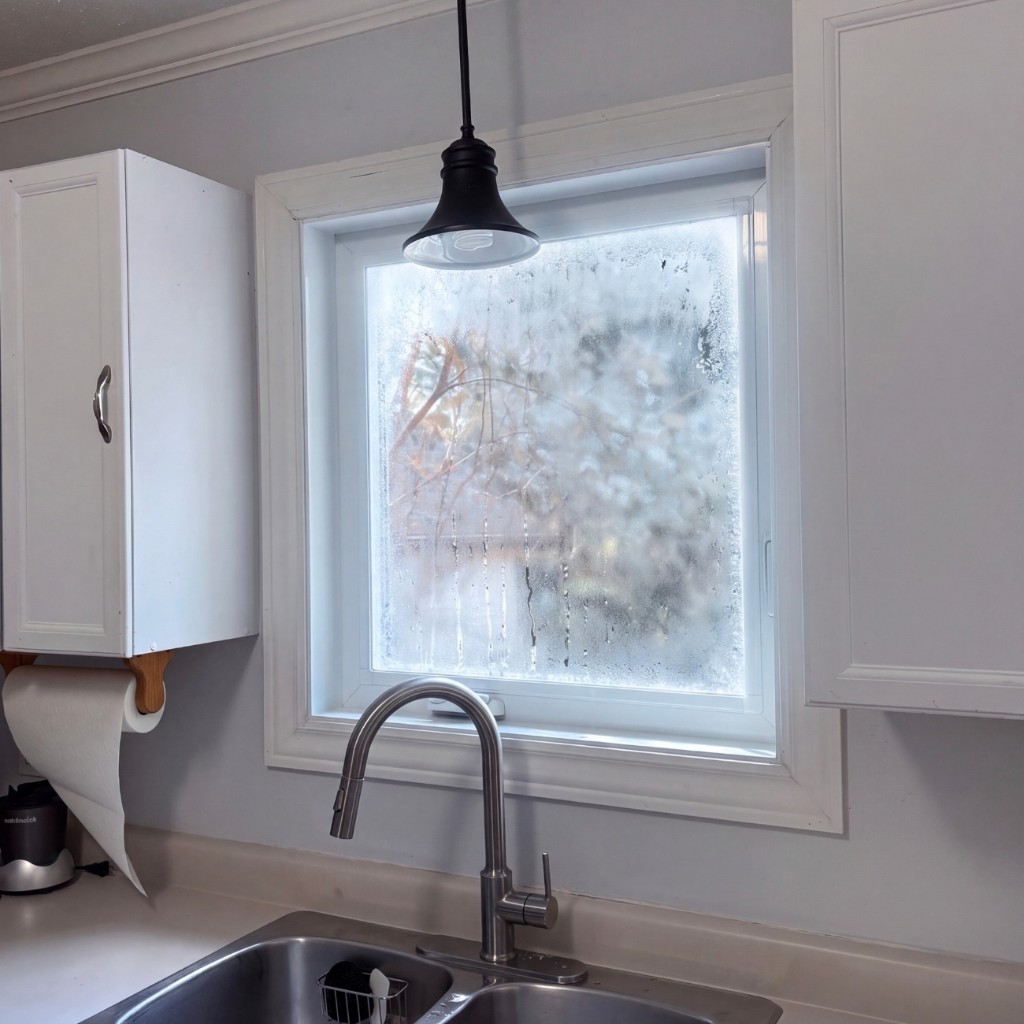
What's happening on the glass
Your indoor air is carrying more moisture than you'd think, from cooking, showers, breathing, even houseplants. When that warm, humid air touches your coldest surface (usually the glass), it condenses.
If the glass is cold enough, that condensation freezes before it has a chance to run off. In other words: ice on your window is just condensation that never got the memo to stay liquid.
When it's normal, and when it isn't
A light frost pattern on the glass during a cold snap is normal and common. It often appears on north-facing windows or on windows behind heavy curtains.
Ice that's building up inside the glass unit itself, or only hugging the frame while the rest of the pane stays clear? That's a different conversation, and we'll get to it below.
Why it happens
There's no mystery here, even if it feels like it at 7am. Ice on your glass comes down to three things working together: where the moisture in your home comes from, why cold glass is the first place it shows up, and why some windows seem to get hit harder than others.
Where the moisture comes from
Your house is, quietly, a humidity generator. Cooking, showering, laundry, breathing while you sleep, it all adds moisture to the air, more than most people realize.
In a well-sealed home, that moisture doesn't have anywhere to go unless you help it along with fans, ventilation, and keeping an eye on your humidity levels.
Why cold glass is the trigger
Glass is almost always the coldest surface in a room, colder than your walls, your ceiling, even the air right next to it. Warm air can hold a lot of moisture, but cold air can't hold nearly as much. So when that warm, humid air drifts across a cold pane of glass, it hits what's called the dew point (the temperature where air simply can't hold onto its moisture anymore) and gives it up right there on the surface. If the glass is cold enough, that moisture skips the liquid stage entirely and turns straight to ice.
It's not your window failing. It's just physics, picking the coldest spot in the room and settling there.

Why only some windows are affected
This is the part that feels random but usually isn't. Canada Mortgage and Housing Corporation (CMHC)'s own research on window condensation points to three core factors:
- the temperature on the inside surface of the glass
- your indoor relative humidity
- the outside air temperature
That interior surface temperature is shaped by the window's R-value (a measure of how well a building material or insulation resists the flow of heat) and by how well air circulates near the glass.
That's why closed blinds, a blocked heat vent, or furniture pushed up against a window can turn a window that was fine last week into one showing frost this week. They're cutting off the air movement that would otherwise keep the glass surface a little warmer.
What to do about it right now
Here's the part you can actually do something about starting right now, and without spending a cent.
Today:
- Wipe the ice or condensation as it melts, so water doesn't sit on your sill and stain or warp it over time
- Run your bathroom fan during and after showers, and your kitchen fan while cooking
- Open blinds and curtains during the day so air can actually reach the glass. A blocked window is a colder window
This week:
- Work on bringing your indoor humidity down toward the target range (we'll get into exact numbers below)
- Check that your bathroom and kitchen fans are actually venting outside, not just recirculating
- If you use a humidifier in winter, dial it back, it may be working against you
The humidity numbers for an Ottawa winter
Here's the number you came for: aim for 30 to 35% relative humidity in winter, and keep it below 50% in summer. That's Health Canada's guidance, and it's the sweet spot between a home that feels comfortable and one where your windows are growing a frost beard.
There's a catch, though. When the temperature really plunges, even 30% can be more than your windows can handle in the cold, and a little condensation on those days doesn't mean anything is wrong with your house.
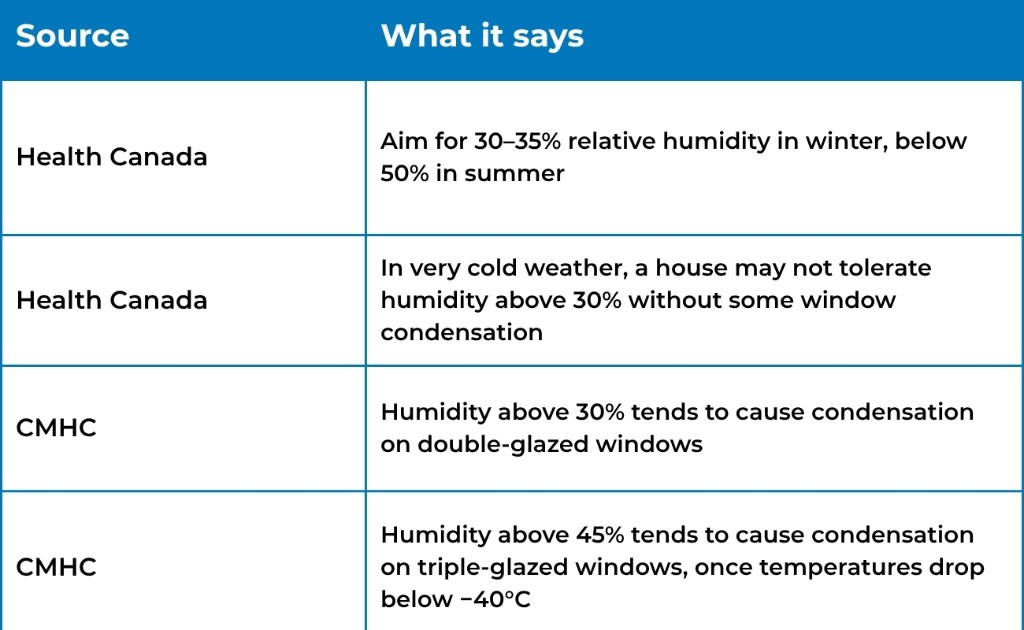
Worth noticing: your glazing type changes your number. Triple-pane windows can tolerate more indoor humidity before they start condensing than double-pane windows can. This is one more reason two houses on the same street can have completely different experiences during the same cold snap.

Is it my windows, or my house?
This is the question that actually matters, so let's be straight with you. Most of the time, the answer is your house, not your windows. But we're not going to pretend that's always the case, because sometimes it genuinely is the window.
The trick is knowing which signs point where, so you're not guessing, and you're not paying for a service call you don't need. Here's how to tell the difference.
Signs it's humidity (most cases)
Frost or condensation spread across the glass surface, worse on colder mornings, worse on windows with less airflow (behind curtains, in bedrooms with the door closed overnight). This is the large majority of what we see, and it responds to the steps above.
Signs the window has actually failed
Ice or fogging between the panes of glass (not on the surface, but trapped inside the unit) points to a failed seal, not a humidity issue. So does moisture or frost concentrated specifically at the frame while the glass itself stays clear; that can point to air leakage rather than condensation.
Should new windows have ice on them?
Here's the part that catches people off guard: yes, sometimes and it doesn't necessarily mean anything went wrong. A new, properly sealed window is tighter than the old one it replaced, which means the humidity that used to quietly leak out through your old frames now has nowhere to go. New windows don't create moisture. They just stop hiding it.
If you've recently replaced your windows and you're seeing more condensation than before, that's often your windows telling you it's time to manage humidity directly, not a sign the new windows underperformed.
When to call someone
Most of what's in this article, you can handle yourself, and most of the time, that's genuinely all it takes.
But we'd rather you know the few situations where a dehumidifier won't fix it, so you're not stuck guessing during a cold snap. Here's what's actually worth a service call.
Ice between the panes: This is the one clear sign of a failed seal, and it won't resolve with a dehumidifier. Worth a service call.
Ice or frost only at the frame edges: If the glass stays clear but the frame consistently frosts or feels drafty, that can point to air leakage around the installation rather than the window unit itself.
What a professional will check
A proper inspection looks at the seal integrity, the frame's air-tightness, and how the window was installed, not just whether there's frost on the glass this morning. If you're not sure which category you're in, that's exactly what a quick consult is for; we're happy to take a look and tell you honestly if it's a window issue or a humidity one.
And to be direct about it, CMHC's own guidance, where high indoor humidity is the actual issue, points toward a dehumidifier or exhaust fan, not new condensation-resistant windows. We'd rather tell you that than sell you something you don't need.
Frequently Asked Questions
Is frost on the inside of my windows normal?
In cold weather, yes, especially on windows with restricted airflow or on the coldest mornings. It becomes a concern when it's happening inside the glass unit itself, or concentrated only at the frame.
Should new windows have ice on the inside?
It can happen, and it's not automatically a defect. New windows seal better than old ones, which can trap indoor humidity that used to escape through the old frames. The fix is usually humidity control, not a warranty call.
How do I stop ice from forming on the inside of my windows?
Lower your indoor humidity — run exhaust fans, ease off any humidifier use, and let air circulate across the glass by opening blinds and curtains during the day.
What humidity level should I keep my house at in winter?
Health Canada recommends 30–35% relative humidity in winter. In very cold snaps, even that range can produce some condensation on double-glazed windows — that alone doesn't mean something's wrong.
How is ice between the panes different from ice on the inside of the glass?
Ice between the panes means the seal on the glass unit has failed and is worth a service call. Ice on the interior surface of the glass is condensation that froze — almost always a humidity issue, not a window issue.
About Verdun
Verdun Windows and Doors has been manufacturing and installing windows and doors for Ottawa and Gatineau homeowners for over 40 years. Every product is custom-built in Canada, every installation is managed by one accountable team from start to finish, and every job is backed by the 25-Year No-Bull Warranty, covering product, parts, labour, and installation with no fine print.