Written by: Alec Bigras
Reviewer: Editorial TeamWhen it's time for a new entry door, there's a lot to think about. Style, glass, colour, hardware, and how it fits your home's style. Somewhere in the middle of all of those decisions, the material question comes up: steel or fibreglass?
There are real differences that are worth understanding, so let's break them down.
What's the real difference between fibreglass and steel doors?
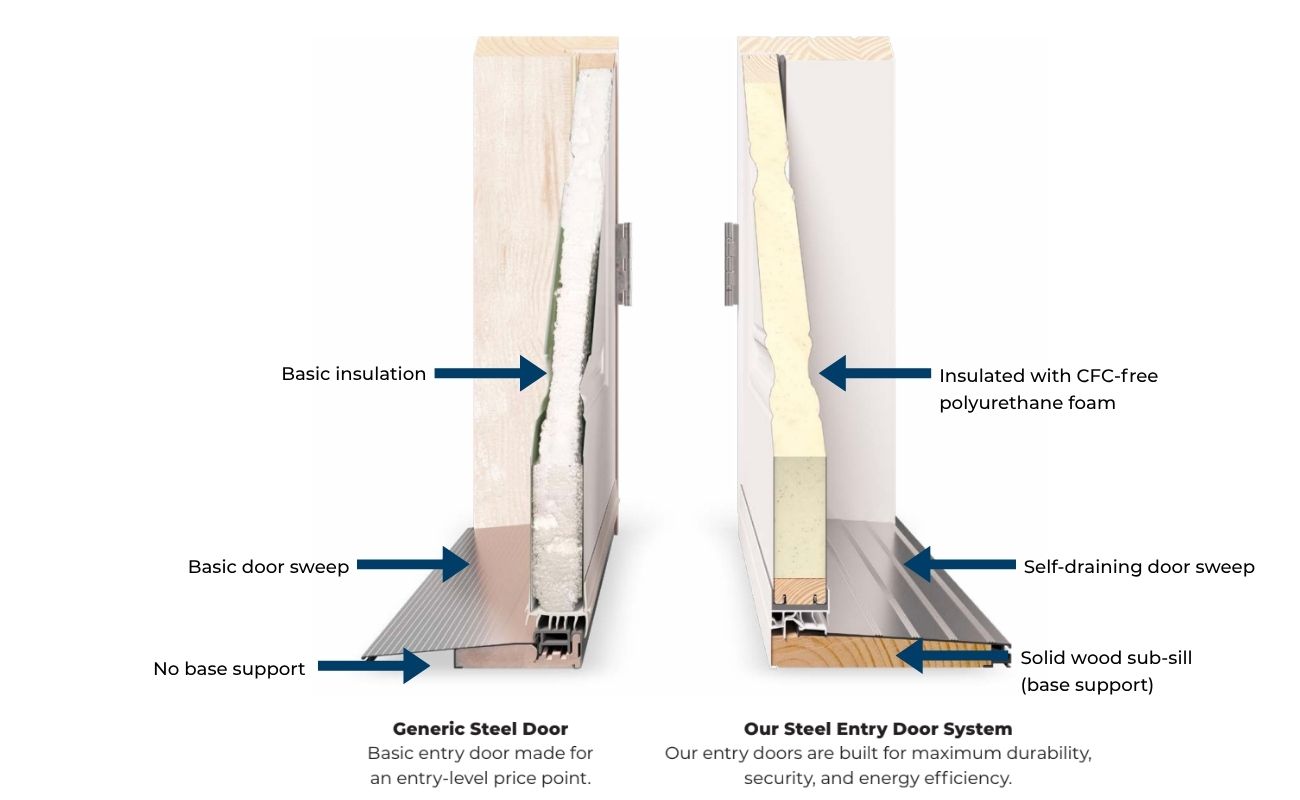
The inside of both doors is basically the same. It's a thick slab of foam insulation, made of CFC-free polyurethane foam, that provides excellent thermal resistance. The difference is what's wrapped around it. Steel doors use galvanized steel panels on top of the insulated core. Fibreglass doors use a composite frame. That's really it. Same warm centre, different outer shell.
But the difference becomes most obvious the moment you actually use one. Fibreglass doors are heavier and denser, with a thicker composite that gives them a feel closer to a solid wood door than anything steel can match. They swing with more heft, close with a deeper and more solid sound, so it's like shutting a quality wood door. That consistent feel holds year-round too, since fibreglass is more dimensionally stable across temperature swings, so the fit, swing, and latch behave the same in January as they do in July.
Steel doors are still solid, dependable, and an excellent choice for most homes. They're lighter, easy to swing, and do the job well (though on cheaper models you may notice a slightly hollow feel or sound when closing.). But side by side, fibreglass simply feels more premium and in a door you open and close every day for the next 25 years, that difference is worth knowing about before you choose.
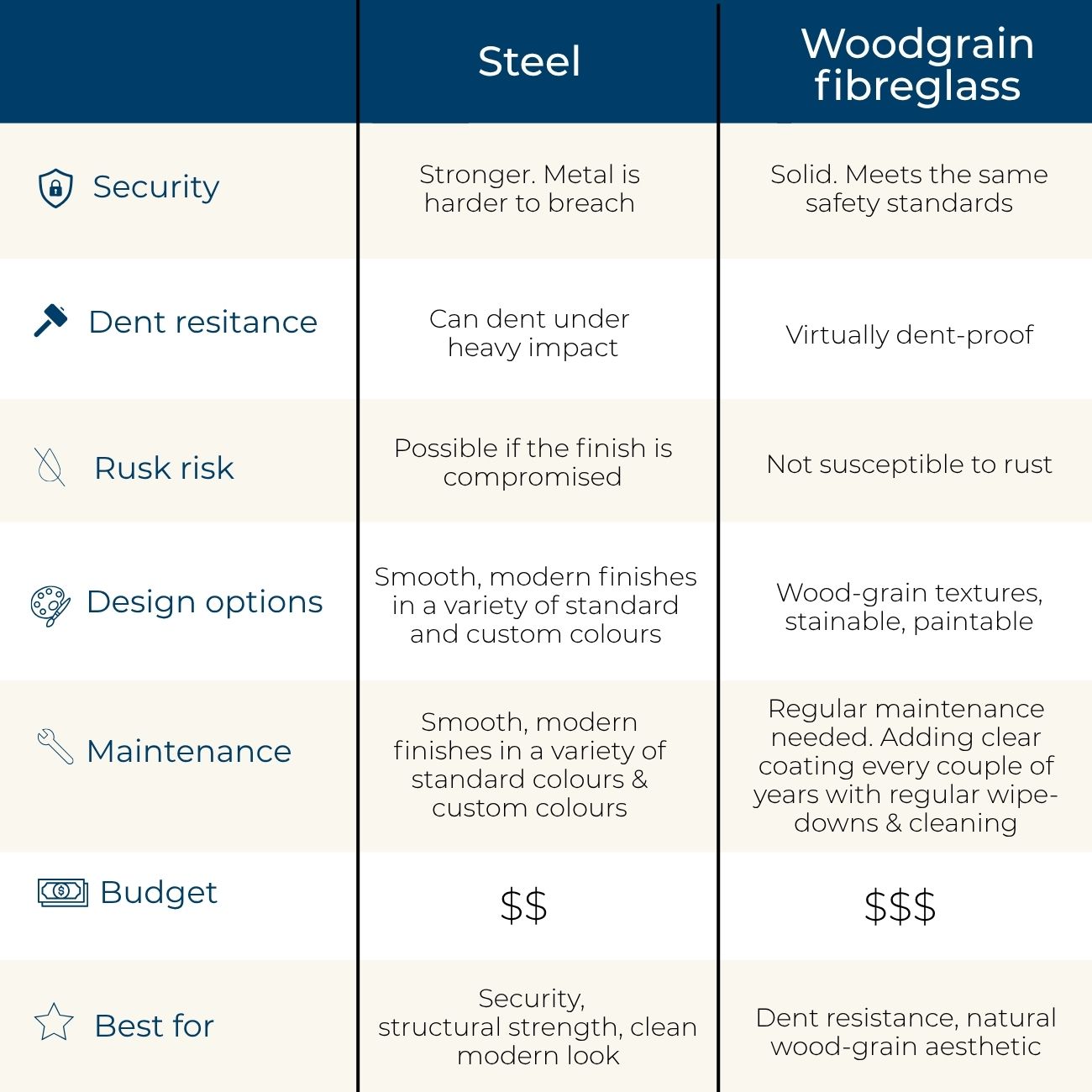
Here's a quick overview comparison:
Durability: Which material holds up to Canadian weather?
Steel handles Canada's extreme temperature swings the best in winter and in summer. When it's –30°C outside your front door and +23°C inside your home, that's a serious tug-of-war happening right at your entry. That constant push and pull between temperatures puts real stress on a door. Steel holds its shape through that kind of stress. It doesn't warp, it doesn't shift, and it stays true in the frame year after year.
Steel earns its reputation for its structural strength. It can however, dent from a hard enough knock, like heavy furniture going through the doorway. If a chip in the paint does happen, a quick touch-up keeps everything protected.
Fibreglass, at our level of craftsmanship, performs like a handcrafted wood door, and you'll feel the difference the moment you open it. It's more dent-resistant than steel, better at resisting minor scratches, won't rust, and its construction means it responds to temperature and humidity well. Fibreglass is a confident and premium choice for Canada's climates.
Security: Is one safer than the other?
Steel has a clear advantage when it comes to front door security. It's simply a harder material to force through. A quality steel entry door has a thick reinforcement plate built into the area around the lock and handle, which is the exact spot someone would target in a break-in attempt.
That extra layer of metal makes a real difference, and it's one of the main reasons the majority of homeowners choose steel. It feels like a vault closing.
Ask about our multi-point locking system. Most front doors come standard with a single deadbolt, one lock, one point of contact. A multi-point locking system automatically engages and locks at three points on the door (top, centre, and bottom). It's just as easy to use as a regular lock, but significantly more secure, and it makes the door more airtight as a bonus. It's one of the most impactful upgrades you can make and it's something we offer on all of our door systems.
Fibreglass doors are built and tested to meet the same forced-entry resistance standards. A well-built fibreglass door with quality hardware is a significant upgrade over an aging wood door.
Maintenance: How much work do they need?
Steel doors are virtually maintenance-free. The main thing to watch for with steel is paint chips. If the finish gets nicked, from a shovel or moving furniture, touch it up before moisture gets to the bare metal.
Fibreglass requires more regular attention, especially woodgrain fibreglass. That premium wood-look finish may need re-staining every one to five years depending on how much sun and weather exposure your door gets. If your entry faces south or west without cover, you'll be on the shorter end of that cycle.
One maintenance task that applies to both materials is keeping your sill clear of snow. This is especially important for back doors where snow can pile up, melt, refreeze, and sit against the bottom of the door for weeks. That moisture cycle can cause water to penetrate through the sill over time.
On a woodgrain fibreglass door, it breaks down the finish. On a steel door, prolonged exposure in extreme cases can lead to surface rust. A quick sweep of the sill after heavy snowfalls goes a long way for either material.
Apart from that, doors also benefit from the same seasonal basics: wipe down the weatherstripping, make sure the sill drains properly, and give the hardware a quick check before winter.
Curb appeal: What style suits you better?
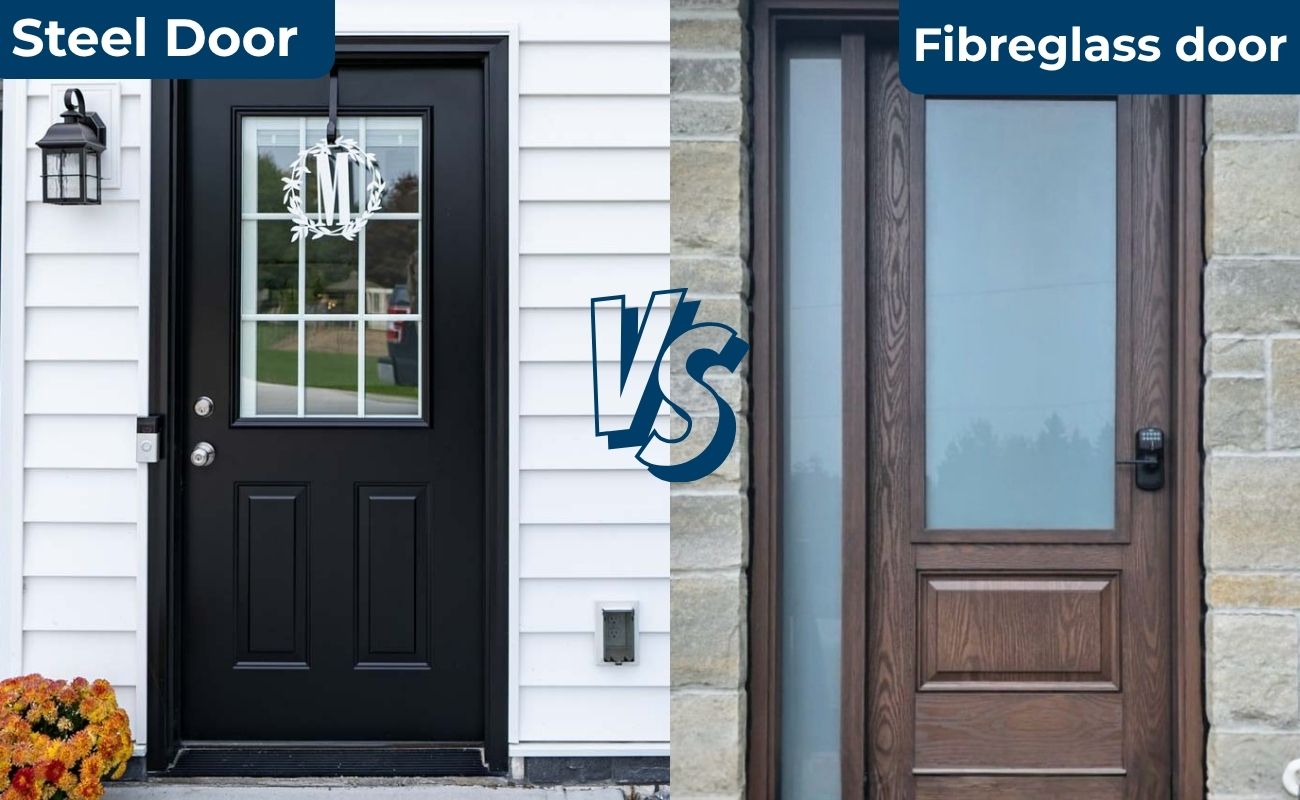
Steel gives you a different kind of beauty. It's clean, smooth, and naturally suits more modern or contemporary homes. The colour options are wider than you might expect, warm clay tones, deep iron ores, soft greys, rich browns, or bold bright colours if you're looking to make a statement. Pair a steel door with glass inserts, sidelites, or a transom, and the whole entrance comes together in a way that genuinely transforms the front of your home.
Fibreglass offers more design versatility if you want the look of a traditional wood-grain door. It can be textured to mimic oak, mahogany, or other wood species convincingly enough that most people can't tell the difference from the street. You can stain it, paint it, and make it feel like a classic wood entrance. Just remember, it comes with some upkeep to maintain that look, but definitely less than what you'd need to do to maintain a wooden door.
Your front door should complement your home's personality. Both materials look great when they're built well, but the style, glass, and colour choices you make have more impact on curb appeal than the material itself.

BONUS: Does the material make a difference in terms of energy efficiency?
The real energy performance of an entry door comes from the complete system: the insulation core, the weatherstripping, the thermal break in the sill, and how well the door seals when it's closed. Both steel and fibreglass doors use the same type of insulated core, so they both deliver strong energy efficiency when they are properly engineered.
Here's the other thing worth knowing: every door is different. The size of your door, the amount of glass, the configuration of sidelites and transoms. All of those customizations affect the overall energy performance. A solid steel slab with no glass is going to perform differently than a door with a full-length glass insert and two sidelites, regardless of the material.
That's why the craftsmanship behind the build matters more than just the label on the box.
What makes a great entry door? (Hint: It's not just the material)
A great entry door is about how the whole system is built. At Verdun Windows and Doors by Nordik, every entry door is made to order. Not pulled off a shelf, actually built for your specific opening, your chosen style, and your hardware.
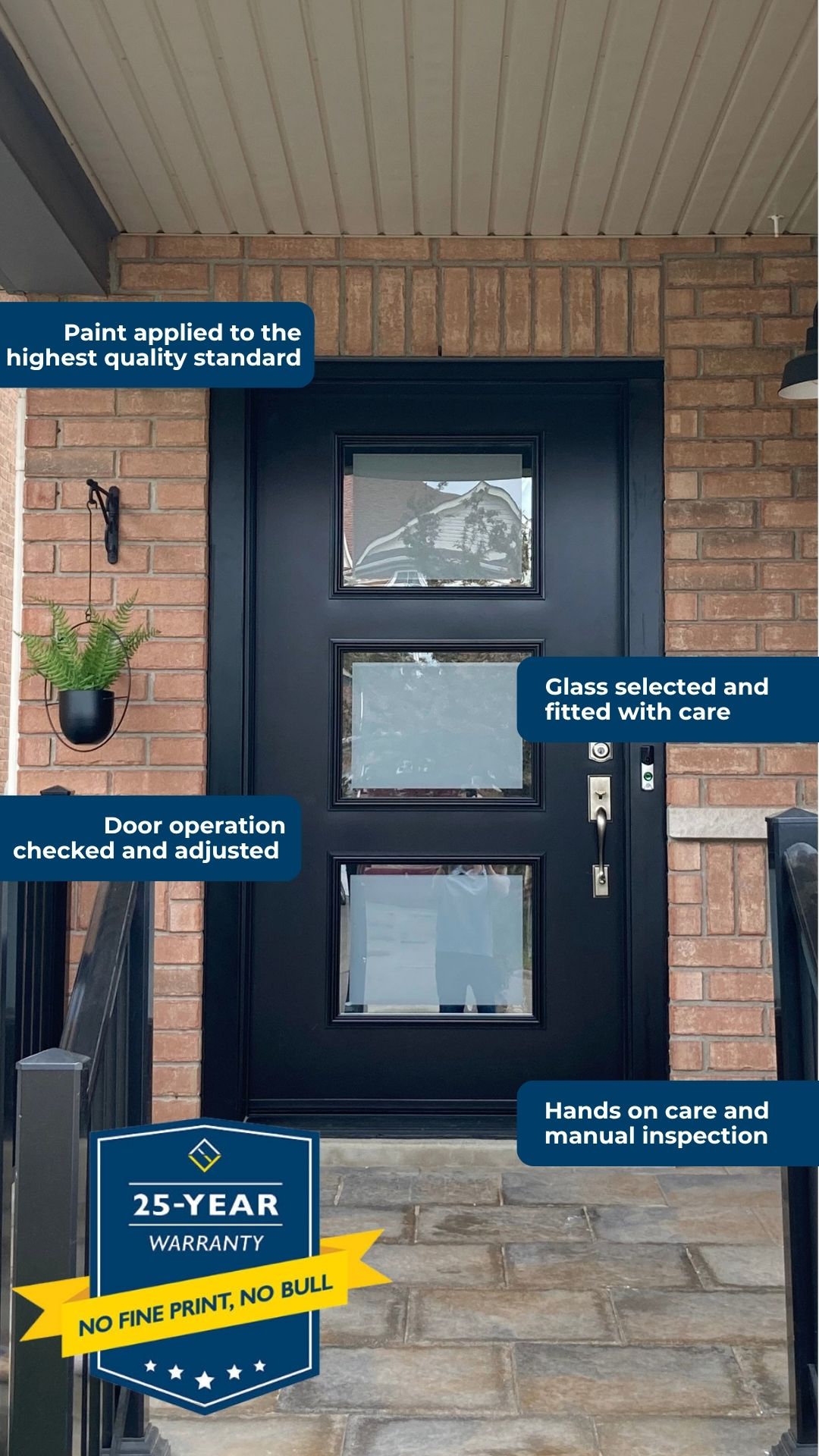
We take lots of pride into the craftsmanship that goes into it with each step involving hands-on care and manual inspection. The paint is applied to the highest quality standard, with a finish that speaks for itself. The glass is selected and fitted with care. The door operation is checked and adjusted before it ever leaves our facility. It's the kind of attention that comes from a team that treats every door like it's going on in their own home.
We're constantly sourcing better components, higher-quality weatherstripping, more precise sill systems, hardware that works smoothly and lasts. That commitment to craftsmanship is what makes a Verdun door feel different the moment you close it.
That's also why both our steel and fibreglass entry doors are backed by the same 25-Year No-Bull Warranty, covering product, parts, labour, and installation. No fine print. We stand behind the quality of the complete system.
Which door material should you go with?
Keeping the above in mind, if we're being honest (and that's kind of our thing) steel handles our extreme temperature swings without warping, it's the strongest material for security, it requires less ongoing maintenance, and it delivers that solid, secure feel that homeowners want from a front door.
Fibreglass is for the homeowners who want the premium upgrade, not just in look, but in the quality and feel of the door. If you want the authentic look and character of wood, without the wood maintenance, fibreglass delivers that. We build fibreglass doors to the same quality standards and back them with the same warranty.
The best advice we can give? Think about your home, your entry, and what matters most to you. Then talk with our expert Verdun Windows and Doors by Nordik consultants who can walk you through all the different style options and help you make the best decision for your home.
Frequently Asked Questions
Is a fibreglass door more energy efficient than a steel door?
Energy efficiency of an entry door comes from the insulation core and how well the complete system seals — the weatherstripping, the frame, the sill. Both steel and fibreglass use the same type of insulated core, so the material makes very little difference. What matters most is the quality of the door system and how precisely it's built.
At Verdun Windows and Doors by Nordik, both fibreglass and steel doors are built with polyurethane foam cores and proper sealing delivers excellent thermal performance for Canadian climates.
Do steel doors rust in Canadian winters?
Quality steel entry doors use galvanized steel panels that can resist rust under normal conditions. Rust only becomes a risk if the paint finish gets chipped and isn't touched up. However, a five-minute fix with matching paint prevents any issues. Also, worth noting that modern factory-applied finishes are highly durable.
Can I paint or stain a fibreglass door?
Yes, and that's one of fibreglass's best features. Wood-grain textured fibreglass can be stained to look like natural oak or mahogany. Just keep in mind that woodgrain finishes need re-staining every one to five years depending on weather exposure to keep looking their best.
Which door material is more secure — steel or fibreglass?
Steel offers a natural edge in raw physical strength. It's simply a harder material to force through. However, both materials meet the same forced-entry resistance standards when properly built.
Another important security feature to consider on any entry door is the locking system. Pairing either material with a multi-point locking system, which engages at three points instead of one, is one of the most effective upgrades you can make for front door security.
What is a multi-point locking system?
A multi-point locking system secures your entry door at three points, top, centre, and bottom, instead of a single deadbolt. When the door closes, the latchbolts automatically engage. Turning the key locks all three points simultaneously, creating the equivalent of a three-deadbolt system. It's just as easy to use as a standard lock but offers significantly better security and a tighter seal. At Verdun Windows and Doors by Nordik, we offer multi-point locks on all of our entry door systems.
About Verdun
Verdun Windows & Doors by Nordik has been manufacturing and installing windows and doors for Ottawa and Gatineau homeowners for over 40 years. Every product is custom-built in Canada, every installation is managed by one accountable team from start to finish, and every job is backed by the 25-Year No-Bull Warranty, covering product, parts, labour, and installation with no fine print.