Written by: Alec Bigras
Reviewer: Editorial TeamIf you're researching double-pane vs. triple-pane windows, you're already asking the right question. Both are great choices, but here's something that might surprise you.
The number of panes is just one piece of a bigger picture. Once you understand what's actually driving performance, between a double pane vs a triple pane the choice becomes a lot clearer. In fact, depending on the window build and quality, our Verdun double-pane windows (engineered with RevoCell® technology) outperform industry standards, including many triple-pane windows on the market.
Let's break this down further into what matters so you can understand the difference.
What Is the Difference Between Double and Triple Pane Windows?
A double-pane window has two sheets of glass with one sealed chamber of insulating gas, such as argon gas, between them. A triple-pane window adds a third sheet and a second argon-filled chamber. More chambers mean more insulation; that part is true. However, pane count alone doesn't tell you how a window actually performs.
Multiple factors affect window performance including the glass coatings, the gas fill, the spacer system, and the frame (which many people don't talk about).
Here's how double-pane and triple-pane energy efficiency stacks up.
What is ER value? Which has better energy efficiency?
In Canada, the number that actually tells you how a window performs is the Energy Rating (ER). It's the one you see on the sticker. Natural Resources Canada (NRCan) calculates it and uses it to determine ENERGY STAR® certification. It combines three performance factors into a single optimized rating.
- U-factor - how effectively the window holds heat in
- Solar Heat Gain Coefficient, or SHGC - how much solar energy makes it through the glass
- Air leakage rate - how airtight the window is
The higher the ER, the better the window performs in terms of energy efficiency all year-round. Simple as that.
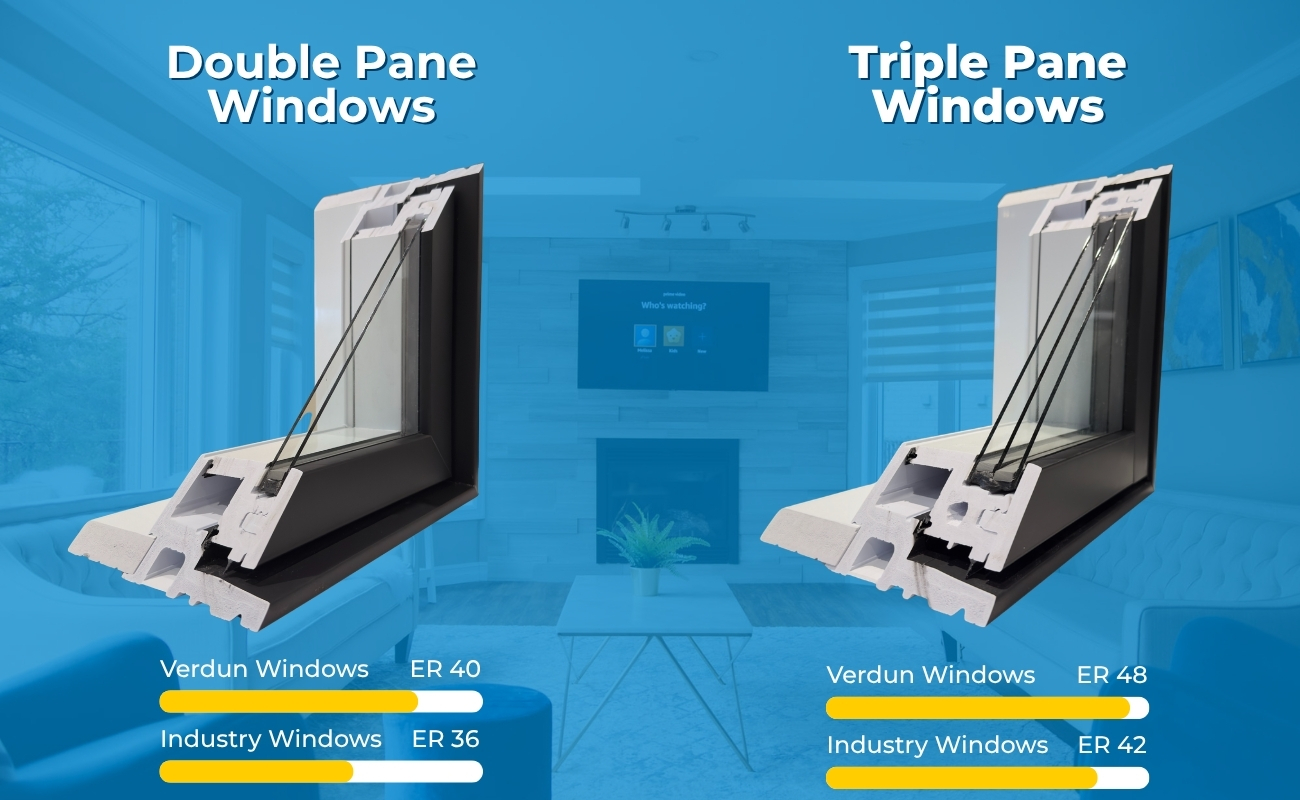
A well-engineered double pane window with an ER of 40 outperforms a poorly built triple pane with an ER of 35. Remember, the pane count is not the whole story.
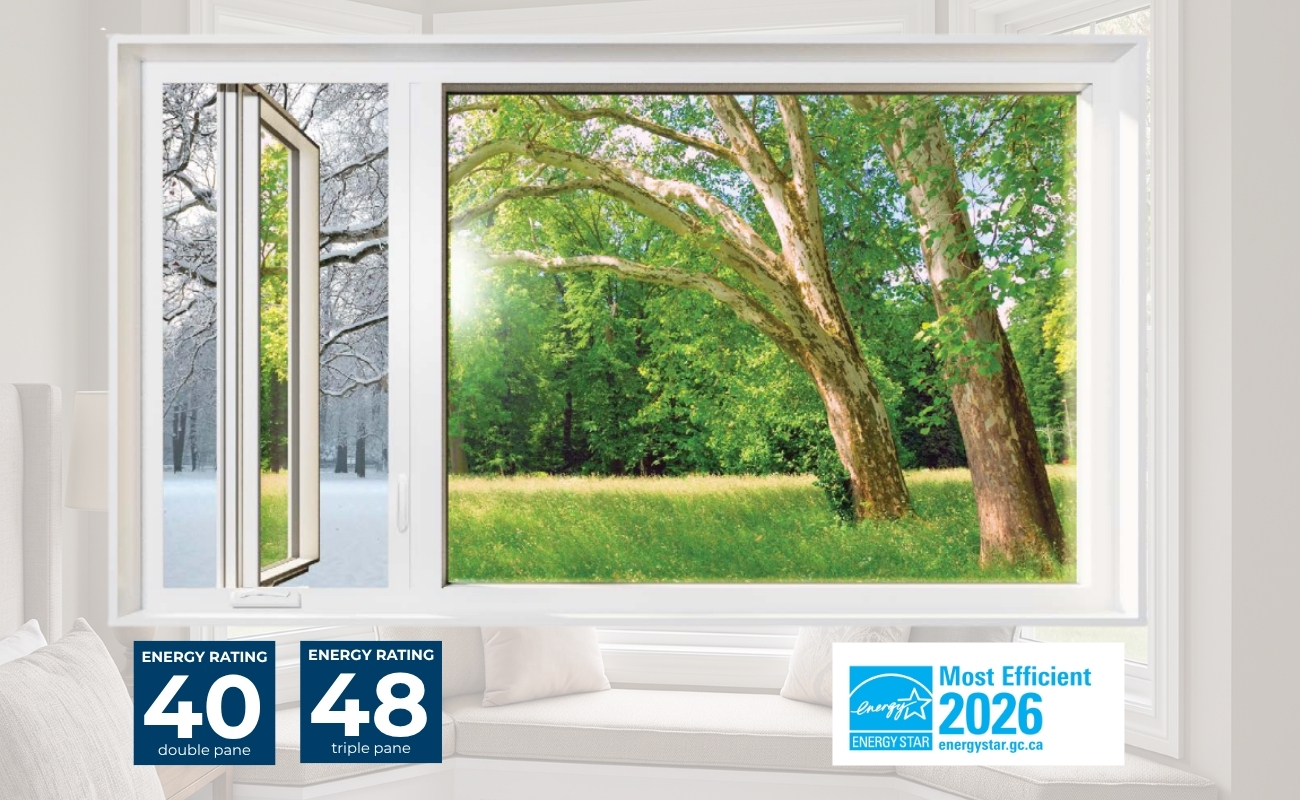
Our RevoCell® double-pane casement, slider, and hung windows in standard configuration consistently hit an Energy Rating (ER) of 40. That means they are ENERGY STAR® 2026 Most Efficient certified, Canada's highest official designation. That means at Verdun, our double-pane already beats the industry standard for double and even some triple-pane products without the associated premium.
For those who want to push performance even further, our triple-pane casement, slider, and hung configurations hit ER 48. Both are excellent. It really comes down to your home and your budget.
You can independently verify any window company's ER claims through the NRCan Searchable Product List and the NFRC (National Fenestration Rating Council).
Does double-pane vs. triple-pane affect the amount of condensation?
Generally, triple-pane windows keep the inner glass surface a bit warmer, which can mean slightly less surface condensation on a harsh winter morning. In the summer, you might notice the opposite. A little condensation on the outside of the glass when it's hot and humid out. That's actually your window doing its job, keeping the inside cool.
However, what makes a bigger difference than the number of panes is the spacer bar sitting along the edge of the glass. This little strip is where cold creeps in first. A high-performance warm-edge spacer, like the EnerEDGE® system in our Verdun RevoCell® windows, does more to fight edge condensation than adding a third pane alone.
What that means for you? You're getting that same edge performance and engineering with our double-pane windows, without the premium price.
A little condensation on the inside of your glass on a cold morning might be normal. It just means your home is holding onto humidity well. A quick wipe and maybe cracking a window or running a bathroom fan usually takes care of it. Nothing to stress about.
The condensation worth paying attention to is the fog between the panes that won't wipe off. That's a seal issue, and no amount of pane count fixes it. You just need a new window at that point.
Cost difference between double and triple-pane windows
Typically, a triple-pane is 10-20% more expensive than double-pane windows. Why? Simply because there's more to it. A third pane of glass, a second argon-filled chamber, an additional spacer, and more weight, which means more material and more engineering. On a full-house window replacement, that premium adds up.
What's worth knowing though is that with most window companies, you're paying that premium to reach a level of performance that a well-engineered double pane can already get you.
If maximum performance is still the goal and budget isn't a concern, our triple-pane is absolutely worth it with our standard configuration casement, hung and slider hitting an ER of 48 in comparison to the industry's average ER of 42.
Bonus: Why the window frame matters more than you think
Here's the thing not many people talk about. The frame is a massive part of the window's total energy performance. So before spending extra on a third pane, it's worth asking what that glass is actually sitting in.
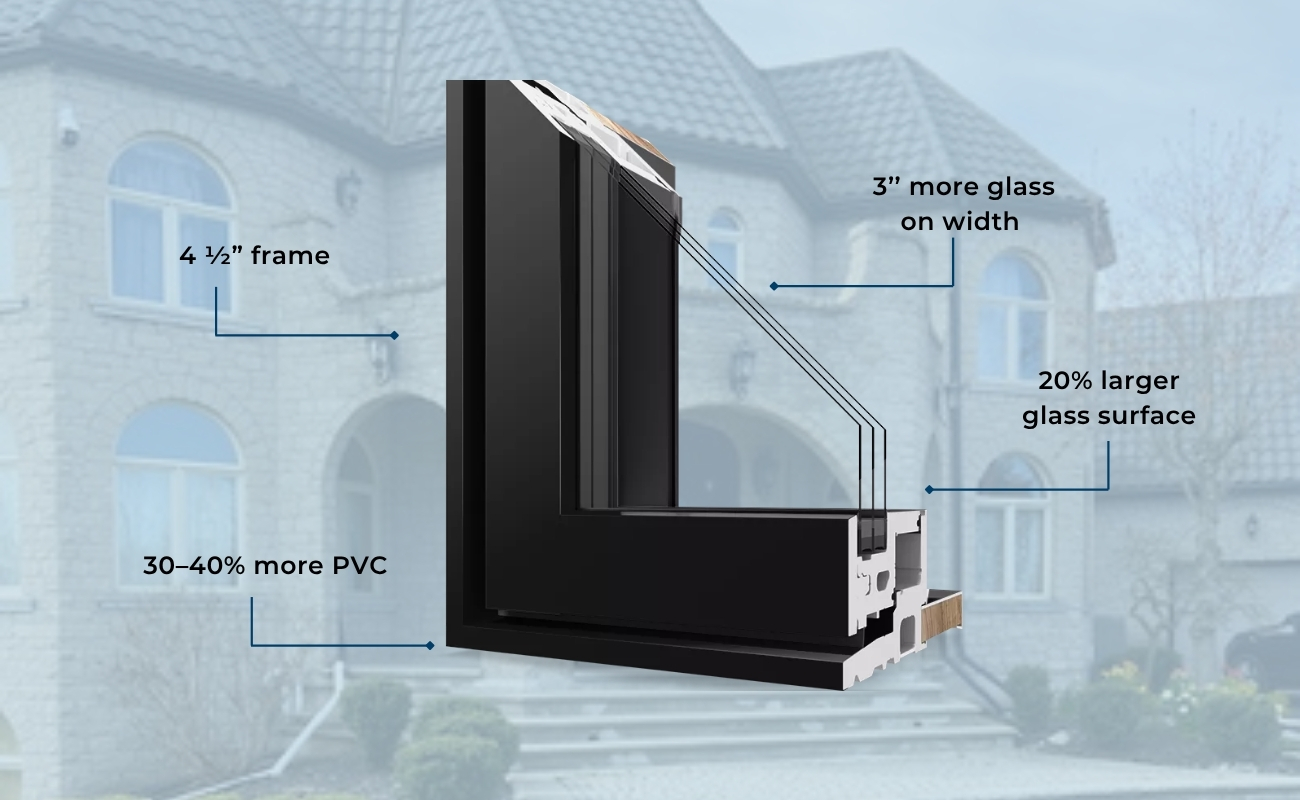
Our Verdun RevoCell® uses a solid-core microcellular PVC frame engineered differently from the ground up. The solid core is filled with billions of microscopic air pockets, each one acting as a tiny buffer that slows heat transfer as it tries to move through the material. The more buffers, the less cold gets through. Our frames also contain 30–40% more PVC than standard hollow vinyl — denser, more material, built specifically for Canada's seasonal extremes.
Because the core on our RevoCell® windows is structurally stronger, the frame can be slimmer while still outperforming. That means a larger glass opening in the same window size. More natural light, better sightlines, without compromising on efficiency.
Now contrast that with the industry standard: hollow vinyl. Widely used and it gets the job done, but hollow means fewer barriers between the temperature outside and the air inside your home. Standard hollow PVC frames can also be more susceptible to the stress of Canada's temperature swings over time, expanding and contracting more, which can gradually affect both performance and airtightness.
Choosing Between Double and Triple Pane: Which One Is Actually Right for Your Home?
For most Ontario homeowners, double-pane is the right starting point, especially when it's built the way our Verdun windows are, without paying 10–20% more just for an extra pane. If you want the highest-rated performance available in Canada, triple-pane is the way to go.
During your consultation, make sure to ask about:
- What the Energy Rating (ER) is (not just the U-factor or pane count)
- What spacer system is being used
- What material the frame is made of
No matter what you're looking for, we offer both options and will always recommend what's genuinely right for your home. All backed by our 25-Year No-Bull Warranty, which is one page, no fine print, covers parts, labour and installation, non-pro-rated and fully transferable.
Frequently Asked Questions
How to Tell If Your Windows Are Already Double or Triple-Pane
The most accurate way to know what you have and whether it's still performing the way it should is through a free in-home assessment. A window and door expert can help identify your current window configuration and give you an honest picture of where you stand and what your home needs.
That said, there are two quick ways to check yourself. Look at the edge of the glass from inside and count the spacer bars. One bar means double pane, two bars means triple pane. You can also check the frame for an NRCan or NAFS certification label. It'll confirm the configuration and specs right there.
What is the ER value of double pane vs. triple pane windows?
The quality and build of the window are what affect its Energy Rating (ER) value which takes into account, air leakage, U-Value (insulation) and Solar Heat Gain. Generally, triple-pane windows may have higher ER values. More panes, means more sealed chambers, which means higher energy efficiency.
However, some double-pane windows on the market like our standard configuration Verdun RevoCell® double-pane casement, slider, and hung windows have an Energy Rating (ER) of 40. They are ENERGY STAR® 2026 Most Efficient certified and beat the industry standard in double-pane and many triple-pane windows too. So you get the kind of efficiency you'd expect to pay more for, but without the higher cost.
Our triple-pane casement, slider, and hung standard configurations hit ER 48 for those who want maximum performance. It all depends on your home and your budget.
How long do triple-pane windows last compared to double-pane?
Depending on build quality and installation both windows last the same amount of time. The extra pane doesn't add or reduce lifespan. What matters is the seal integrity, the spacer quality, and how well the window was installed. That's why the warranty matters.
Our Verdun windows are backed by our 25-year No-Bull warranty because we're confident that we've built them to withstand multiple seasons and outlast most. This includes coverage of parts, labour, and installation, is non pro-rated and fully transferable.
Can you upgrade from double pane to triple pane without replacing the frame?
Triple-pane glass units are thicker and heavier, and they require a frame designed to accommodate them. If you want a triple pane, you're likely in need of a full window replacement. However, a window expert can help you assess your current windows and give you an honest recommendation that works for your home and budget.
Which window styles are available in triple pane?
Whether you're replacing one window or the whole home, you're not limited on style or configuration. Most major window styles, casement, awning, hung, slider, and picture windows, are available in both triple-pane configurations — with the exception of a few curved shapes.
Plus, every Verdun window comes with the RevoCell® frame, which uses microcellular PVC (mPVC). Typically, with 30–40% more PVC than standard frames, it's significantly stronger and engineered for maximum energy efficiency. The denser core also allows for slimmer frames, meaning more glass and more natural light for the same opening size.
About Verdun
Verdun Windows & Doors by Nordik has been manufacturing and installing windows and doors for Ottawa and Gatineau homeowners for over 40 years. Every product is custom-built in Canada, every installation is managed by one accountable team from start to finish, and every job is backed by the 25-Year No-Bull Warranty, covering product, parts, labour, and installation with no fine print.